Buy 2, save 10% | Buy 4, save 15% | Buy 6, save 20% on Paper & Mediums
FREE No.20 Painting Knife when you spend £60
Through the eyes of Shannon Bono
Shannon Bono is a London-based artist whose work embodies an Afrocentrist consciousness, centring Black womanhood as a powerful source of knowledge and understanding. Using oils, acrylics, and spray paint, she creates layered figurative works inspired by everyday life, travel across Africa, and real conversations with women, forming a visual language rooted in magic and divination.
Can you introduce yourself and your practice?
My name is Shannon Bono and I’m a visual artist and a teacher. My practice consists of the Black female narrative. I incorporate African spirituality in there, and narratives and everyday life.
Do you have a favourite colour you like to work with in the studio?
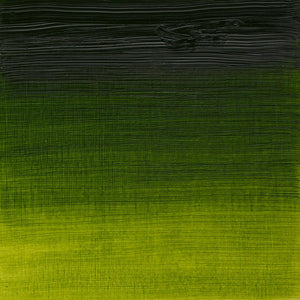
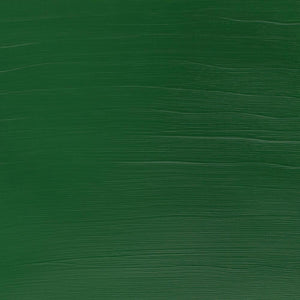
I think my favourite colour that I like to work with in the studio is green. I like all shades of green, all kinds of green. I think sap green, olive green. Green is like my colour.
What materials do you mainly work with?
I mainly work in oil paints and spray paints, and I incorporate acrylic paints, a bit of everything really.
Where do you find inspiration for your work?
I think I get inspiration from daily life and having conversations with friends, family, and women that I find interesting. I get a lot of inspiration when I go on holiday to Africa and see women in their cultural attire; spiritual women that are helping the communities, that are seen as doctors and, I guess, important members of the community.
What is it about these women that inspires you?
I think those women just living life and tapping into their magic really inspires me to create paintings about everyday women. I feel like inspiration just really comes out of nowhere. It’s very unintentional.
Can you give me an example of a particularly memorable source of inspiration?
I think the most memorable one I can think of is my best friend, who is in a same-sex relationship, and she was discussing her process of queer family planning as a Black woman.
How did that conversation influence your work?
I was just so unaware of the process. I found it really interesting, and that inspired me to make a painting about it. So whenever I would show that painting, I would discuss her story, her life, and how she came to the place that she is now.
How do you usually begin a painting?
First of all, I start off the first layer with acrylics and spray paints. That is very much about taking on the magic of the studio and allowing the paints to tell me what to do, where to stop, when I should continue again, where I should place it, and when I should let it drip or let it fall.
How much planning goes into your process?
I just follow my intuition. When it comes to the figurative element, I do a lot of self-portraits, but I’m also thinking about the story, specifically what I want to discuss in that moment. Again, that is based on intuition, and it just comes to me. I can plan as much as I want to, but it never turns out right.
When do you feel your strongest work emerges?
It’s always when things happen naturally in the studio. That’s when the best paintings come out.
How does your background influence your work?
As a Black woman living in London, with an African background, I have a lot of Caribbean friends. I believe all of that influences my practice. I do have a focus on African culture and this blending of nationality, being British but then being African, when I include self-portraits in my paintings.
How do you express your contemporary identity into your work?
I am a Black woman, but there are certain things that tell you that I’m a contemporary person living in London: the colours I use, the patterns I use, textures, and a lot of the African sculptures that I depict, which are obviously from the continent.
What role does your work play in connecting you to others?
I believe my work helps me connect with the outside world and other creatives and provides inspiration for my paintings.
How do you feel about working alone in the studio?
I think being a painter in your studio can be a very lonely process. I believe that to make work you have to have life experiences. Sometimes you get burnout in the studio, and nothing comes out because you haven’t actually lived life.
How do you overcome that burnout?
You need to make connections and bring them back to the studio to create. Listening to other artists speak about how they find inspiration, they always say: get out of the studio and live life.
Do you think artists see the world differently?
I have the artist’s eye. All creators have this eye. You’ll be outside in the world doing your own thing, and you’ll see things in a different way. You see the beauty in everything, and random things will inspire you.
What influences the backgrounds of your paintings?
The backgrounds of my paintings are inspired by African Dutch wax fabrics. I also have a science background, so I merge science with scientific symbols or structures.
How has your visual language evolved recently?
Most recently, my work has really focused on this visual language of magic. The recurring symbols, motifs, or totems in my work are based on either the African countries I’ve visited or my own background. My mum is from Sierra Leone, and my dad is from Congo.
How does travel inform your research and practice?
I’ve recently been to Cameroon and Gambia. When I go there, I like to speak to women who practise traditional African religions. I also like to go to museums, look at the sculptures, and hear about them from their point of view, compared to a Western space, so I’m depicting them in the right way.
What was important to you when you were considering becoming an artist?
When I was younger and felt I wanted to be an artist but wasn’t too sure, the most important thing for me and something my tutors noticed, was seeing Black female artists who are established in their fields, representing us in different lights.
Why is that representation so important?
I might not relate to every single one, but it’s important to show all aspects of our lives.
How do you aim to expand that representation in your own work?
I wanted to expand it further by moving into abstract works and sculptural pieces, and by drawing from different cultures to represent the totality of our experiences, not just negative or positive, but everything in between.
Does history play a role in your work?
Yes. Going back to history, even one of the portraits I did recently, the Windrush generation portrait, speaks to different generations and how they’ve contributed to their communities before I was even here.
What materials are you currently exploring?
I’ve recently been working with a lot of wood and making sculptural paintings, while thinking about how my work would be received.
What remains most important to you as your practice evolves?
I want to be authentic, to stay true to the work and to the materials that traditional African practitioners would use.
Sign up below to receive the latest articles straight to your inbox, alongside a host of artist tips and techniques and updates on new releases, curated to support your practice.





![W&N COTMAN WATER COLOURS H/P LEMON YELLOW HUE [COMPOSITE] 094376901658](http://uk.winsornewton.com/cdn/shop/files/10262.jpg?crop=center&v=1714069205&width=20)
![W&N COTMAN [SWATCH] LEMON YELLOW HUE](http://uk.winsornewton.com/cdn/shop/files/2922.jpg?crop=center&v=1714069205&width=20)

![WN PROMARKER COOL GREY 3 [COMPOSITE] 884955041406](http://uk.winsornewton.com/cdn/shop/files/77586.jpg?crop=center&v=1741263144&width=20)
![W&N DESIGNERS GOUACHE 14ML ZINC WHITE [COMPOSITE] 50947195](http://uk.winsornewton.com/cdn/shop/files/10437.jpg?crop=center&v=1717586081&width=20)
![W&N DESIGNERS GOUACHE [SWATCH] ZINC WHITE](http://uk.winsornewton.com/cdn/shop/files/3022.jpg?crop=center&v=1714143175&width=20)
![W&N GALERIA ACRYLIC TUBE 60ML TITAN WHITE 08 [COMPOSITE] 094376914061](http://uk.winsornewton.com/cdn/shop/files/9396.jpg?crop=center&v=1714072593&width=20)
![W&N GALERIA [SWATCH] TITANIUM WHITE](http://uk.winsornewton.com/cdn/shop/files/3097.jpg?crop=center&v=1714072593&width=20)

![W&N BLACK FINELINER LS 0.1 [CAP ON]](http://uk.winsornewton.com/cdn/shop/files/64128.jpg?crop=center&v=1736866967&width=20)
![WN COTMAN 8 PC FLORAL POCKET BOX [OPEN WITH STICKER] 884955081129](http://uk.winsornewton.com/cdn/shop/files/132624.jpg?crop=center&v=1761839596&width=20)
![W&N COTMAN WATERCOLOUR 8HP FLORAL POCKET SET [FRONT]](http://uk.winsornewton.com/cdn/shop/files/97499.jpg?crop=center&v=1760698026&width=20)
