

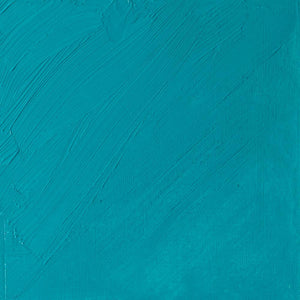
Across centuries and continents, turquoise has been used as both a status symbol and an emblem of spiritual protection. Today the colour remains a popular choice for jewellery, textiles, interiors and artwork, bringing a sense of freshness and elegance to both traditional and contemporary designs.
Origins of turquoise
The term ‘turquoise’ derives from the French ‘turquois’, meaning ‘Turkish’ – the mineral was first brought to Europe through Turkey from Iran and Afghanistan.
It was mined by the Ancient Egyptians in the Sinai Peninsula, a region which was consequently known as the Country of Turquoise. Archaeological finds reveal turquoise’s use in adornments believed to offer protection and health, most famously Tutankhamun’s richly inlaid funerary mask.
Beyond Egypt, Aztecs viewed turquoise as the embodiment of fire and strength, associating the colour with their feathered serpent god Quetzalcoatl.
For Native Americans, turquoise is a colour with deep spiritual significance. The Navajo people have used turquoise in rain ceremonies, while Apache traditions involve attaching turquoise to bows to enhance their accuracy.
Examples of turquoise in popular culture
Wes Anderson makes frequent use of turquoise in films such as The Life Aquatic with Steve Zissou (2004) and Moonrise Kingdom (2012). By combining blue-green shades with contrasting colours such as yellow, red and pastel pink, the director has established a distinctive visual style.
Turquoise features prominently on Japanese city pop record sleeves from the 1980s. The artwork of Hiroshi Nagai has become synonymous with the genre – turquoise is a defining feature in his aspirational images, which often feature coastal views, cloudless skies and shimmering pools.
Science fiction films like Blade Runner (1982) and Tron: Legacy (2010) make heavy use of neon turquoise in their retro-futuristic cityscapes. Similarly, glowing turquoise light can be found throughout The Legend of Zelda: Breath of the Wild (2017), symbolising an ancient technology that’s key to the game’s story and visual identity.
How artists use turquoise
Turquoise’s cool, luminous tones are found throughout the art world, creating atmospheric depth and providing a bold contrast to warmer colours.
Claude Monet frequently used turquoise and other blue-green tones to capture the shifting interplay of light, water and atmosphere in his Impressionist landscapes. In works like La Grenouillère (1869) and his Water Lilies series, dappled strokes of turquoise ripple across the canvas, suggesting sunlit shallows or the reflection of sky on moving water.
Salvador Dalí's use of turquoise contributes to the surreal and dreamlike quality of his paintings. Turquoise skies and shadows feature in works like The Persistence of Memory (1931) and The Burning Giraffe (1937), contrasting with warmer tones to create visually dynamic, otherworldly images.



![W&N COTMAN WATER COLOURS H/P LEMON YELLOW HUE [COMPOSITE] 094376901658](http://uk.winsornewton.com/cdn/shop/files/10262.jpg?crop=center&v=1714069205&width=20)
![W&N COTMAN [SWATCH] LEMON YELLOW HUE](http://uk.winsornewton.com/cdn/shop/files/2922.jpg?crop=center&v=1714069205&width=20)

![WN PROMARKER COOL GREY 3 [COMPOSITE] 884955041406](http://uk.winsornewton.com/cdn/shop/files/77586.jpg?crop=center&v=1741263144&width=20)
![W&N DESIGNERS GOUACHE 14ML ZINC WHITE [COMPOSITE] 50947195](http://uk.winsornewton.com/cdn/shop/files/10437.jpg?crop=center&v=1717586081&width=20)
![W&N DESIGNERS GOUACHE [SWATCH] ZINC WHITE](http://uk.winsornewton.com/cdn/shop/files/3022.jpg?crop=center&v=1714143175&width=20)
![W&N GALERIA ACRYLIC TUBE 60ML TITAN WHITE 08 [COMPOSITE] 094376914061](http://uk.winsornewton.com/cdn/shop/files/9396.jpg?crop=center&v=1714072593&width=20)
![W&N GALERIA [SWATCH] TITANIUM WHITE](http://uk.winsornewton.com/cdn/shop/files/3097.jpg?crop=center&v=1714072593&width=20)

![W&N BLACK FINELINER LS 0.1 [CAP ON]](http://uk.winsornewton.com/cdn/shop/files/64128.jpg?crop=center&v=1736866967&width=20)
![WN COTMAN 8 PC FLORAL POCKET BOX [OPEN WITH STICKER] 884955081129](http://uk.winsornewton.com/cdn/shop/files/132624.jpg?crop=center&v=1761839596&width=20)
![W&N COTMAN WATERCOLOUR 8HP FLORAL POCKET SET [FRONT]](http://uk.winsornewton.com/cdn/shop/files/97499.jpg?crop=center&v=1760698026&width=20)
